
8th Jun 2026
In-Ground vs Above-Ground Trampolines: Which One Is Really Right for Your UK Garden?
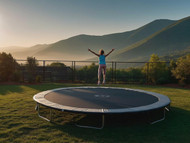
Walk through almost any residential street in the UK today and you will likely spot at least one trampoline in a back garden. But increasingly, you might notice something different about some of them — they appear to be sitting not on top of the lawn but within it, flush with the grass, virtually invisible from a distance. These are in-ground trampolines, and over the past five years they have quietly transformed from a niche landscaping curiosity into one of the most sought-after garden features in Britain.
So what exactly is the difference between an in-ground and an above-ground trampoline? Which is safer? Which performs better? And critically — which one is the right choice for your garden, your family, and your budget? At Super Tramp Trampolines, we sell both types and know them intimately. This blog gives you the complete, unbiased picture.
What Exactly Is an In-Ground Trampoline?
An in-ground trampoline — sometimes called a sunken trampoline or recessed trampoline — is installed into a pit excavated from the ground so that the jumping mat sits level with, or just slightly above, the surrounding lawn surface. The trampoline frame is supported by the pit walls and a retaining structure, and the space beneath the mat (which is critical for the bounce mechanism to work) is managed through careful pit design, drainage, and ventilation.
Above-ground trampolines, by contrast, stand on a steel leg frame that elevates the jumping mat typically between 70cm and 90cm above the ground — roughly waist height on an adult. They are freestanding, require no groundwork, and can in principle be repositioned or relocated.
Both types use the same fundamental spring-and-mat bounce mechanics. The difference is entirely in how they sit relative to the ground — and that single difference has a surprisingly wide range of practical consequences.
Safety: The Most Important Factor for Most Families
For the majority of UK parents, safety is the primary consideration when choosing a trampoline, and this is where in-ground trampolines hold a significant and genuine advantage.
The Fall Height Advantage
The most serious trampoline injuries in the UK — and globally — involve falls off the trampoline onto hard ground. An above-ground trampoline elevates users to a height of 70-90cm. A fall from this height, particularly for a young child, carries a real injury risk, especially if the user lands awkwardly or misses the safety zone around the trampoline. This is why enclosure safety nets are so strongly recommended for above-ground models.
An in-ground trampoline eliminates this risk category almost entirely. Because the mat is at ground level, a user who rolls or bounces off the edge simply lands on grass — from a height of a few centimetres. The injury potential from an off-mat fall is dramatically reduced. Many parents of younger children, and those with children who have additional physical needs or coordination challenges, find this a compelling and decisive advantage.
Enclosure Nets: Still Recommended, But Less Critical
Enclosure nets remain advisable with in-ground trampolines — primarily to prevent children from bouncing beyond the mat boundary — but they are less critical for fall prevention. Some families with older children or teenagers choose to use their in-ground trampoline without a net entirely, which also significantly improves the visual appearance of the installation.
Aesthetics: The Garden Design Question
Let us be direct: above-ground trampolines are not particularly attractive garden features. Their steel frames, colourful pads, and bulky netting are functional and purposeful, but they dominate the visual space of any garden they occupy. Many homeowners who invest significantly in their outdoor space — patio areas, planting borders, lawn care — find the visual impact of an above-ground trampoline a difficult compromise.
In-ground trampolines are a different proposition entirely. When installed well, they integrate into the garden landscape almost invisibly. The lawn flows up to and around the trampoline edge; from the kitchen window or a garden seating area, the trampoline is simply not a dominant visual feature. For garden-proud homeowners, and for those thinking about the long-term visual character and potential resale value of their property, this aesthetic advantage is often worth the additional installation investment on its own.
Landscape designers and garden architects in the UK have enthusiastically embraced in-ground trampolines as a result — regularly incorporating them into garden redesigns as a considered, intentional feature rather than an afterthought.
Bounce Quality: Is There a Difference?
This is a question we are frequently asked, and the honest answer is: not significantly, if the in-ground installation is done correctly.
The quality of the bounce on any trampoline is determined by the spring system, the mat construction, and the airflow beneath the mat. Above-ground trampolines have unrestricted airflow beneath them by nature, which ensures optimal bounce dynamics. In-ground trampolines must replicate this condition through pit design — specifically, the pit must be deep enough, wide enough, and properly ventilated to allow air to move freely as the mat compresses downward.
When an in-ground trampoline is professionally installed with correct pit dimensions and drainage, the bounce quality is indistinguishable from an equivalent above-ground model. Problems only arise when pit design is inadequate — too narrow, too shallow, or poorly drained — which restricts airflow and deadens the bounce. This is why following manufacturer installation specifications precisely is so important, and why choosing a reputable brand with detailed installation guidance matters enormously.
Super Tramp in-ground models come with comprehensive installation documentation covering pit dimensions, drainage requirements, retaining wall specifications, and airflow management, ensuring the bounce quality matches the performance of our above-ground range.
Installation: What In-Ground Actually Involves
The most common concern families raise about in-ground trampolines is the installation process. It is true that an in-ground trampoline requires significantly more preparation than an above-ground model. Here is an honest breakdown of what is involved:
- Excavation: A pit of approximately 1 metre depth (for most standard-sized models) must be dug to the required diameter. For a 12ft trampoline, this means removing several cubic metres of soil. This can be done by a competent DIY enthusiast with the right tools, or by a landscaper or groundworks professional.
- Retaining structure: The pit walls need to be supported to prevent soil collapse over time. Options range from retaining wall blocks to galvanised steel pit liners (which some manufacturers supply as part of the package). The retaining structure also needs to allow for water drainage.
- Drainage: The base of the pit must drain freely. In UK clay soils, this may require a gravel or rubble drainage layer, or in some cases a soak-away system. Poor drainage leads to standing water in the pit, which damages the trampoline frame and deadens the bounce.
- Ventilation: An air vent or channel must connect the pit to the outside air to allow pressure equalisation as the mat bounces. Without this, the trapped air beneath the mat creates resistance and significantly reduces bounce quality.
- Assembly: Once the pit is prepared, the trampoline itself assembles in much the same way as an above-ground model — frame, springs, mat, and surround padding.
Total installation time for a competent DIY installer is typically a full weekend. A professional landscaper or groundworks contractor can typically complete the groundwork in a single day. The trampoline assembly itself takes two to three hours with two adults.
Cost: The Honest Comparison
Above-ground trampolines have a clear cost advantage in terms of initial purchase price. A quality above-ground family trampoline from brands such as Telstar or Super Tramp can be purchased for between £250 and £600 depending on size and specification. Assembly requires no tools beyond basic hand tools and takes a few hours.
In-ground trampolines typically carry a similar or only slightly higher product price for the trampoline itself, but the installation cost is additional. If you undertake the groundwork yourself, your additional cost is primarily time and equipment hire (a mini-digger rental for a day typically costs £150-£250). If you employ a landscaper, professional groundwork costs typically run between £400 and £800 depending on soil type, access, and location.
However, it is worth considering the total-value equation over time. An in-ground trampoline adds meaningful value to the property's garden appeal; an above-ground trampoline does not. In-ground models also tend to have longer effective lifespans because the frame is protected from wind loading — a significant cause of frame fatigue and damage in above-ground models in exposed UK gardens. Over a 7-10 year ownership period, the cost differential often narrows considerably.
Which One Should You Choose? A Practical Summary
There is no universally correct answer, but here is how we would frame the decision for most UK families:
- Choose an above-ground trampoline if: you want the quickest, most affordable route to having a trampoline in your garden; you rent rather than own your property; you have a smaller garden and may want to move or reposition the trampoline; or you want the flexibility to take it with you if you move house.
- Choose an in-ground trampoline if: safety is your paramount concern, particularly with younger or less coordinated children; you care about the visual appearance of your garden and do not want a large steel structure as a permanent feature; you own your home and plan to stay for at least several years; you have clay or waterproof-able soil that can support a well-draining pit; or you want to invest in a long-term garden feature that will remain compelling as your children grow.
Conclusion: Two Excellent Options for British Gardens
Both in-ground and above-ground trampolines, when chosen from quality brands and properly installed, deliver years of genuine enjoyment, fitness benefits, and family memories. The choice between them is ultimately about your garden, your priorities, and your long-term plans — not about one type being objectively superior to the other.
At Super Tramp Trampolines, we stock a wide range of both in-ground and above-ground models from trusted brands including Super Tramp, Telstar, Vuly, and Akrobat. Our team is always happy to discuss your specific garden situation and help you identify the best choice for your family. Browse the full range at trampolinesonline.co.uk, or call us on 01884 675 801 — we have been doing this for over 20 years and we love helping families get it right.